Hadley in San Francisco
Hadley was the founding conductor of the modern San Francisco Symphony in 1911 and in so doing he became the first native American to hold a major conducting position¹. He had the task of turning of group of professional popular players into true symphony musicians. As in Seattle, he devoted considerable time to composition as well. Although he recieved critical acclaim and was, as everywhere, loved by the musicians, there was constant clangor in society and the press for a European conductor. Controversy also arose over Hadley's appointment of his brother, Arthur Hadley, as principal cellist. (Arthur would eventually become principal of the Boston Symphony). Hadley also engaged violinist and conductor Herman Heller - a most fortunate occurence that would yield landmark results in the development of film music after two dozen years of friendship. With 1915's Panama Pacific International Exposition showcasing San Francisco's rise from the ashes on the horizon, Hadley was replaced by German conductor Afred Hertz, who would go on to a long and memorable tenure.
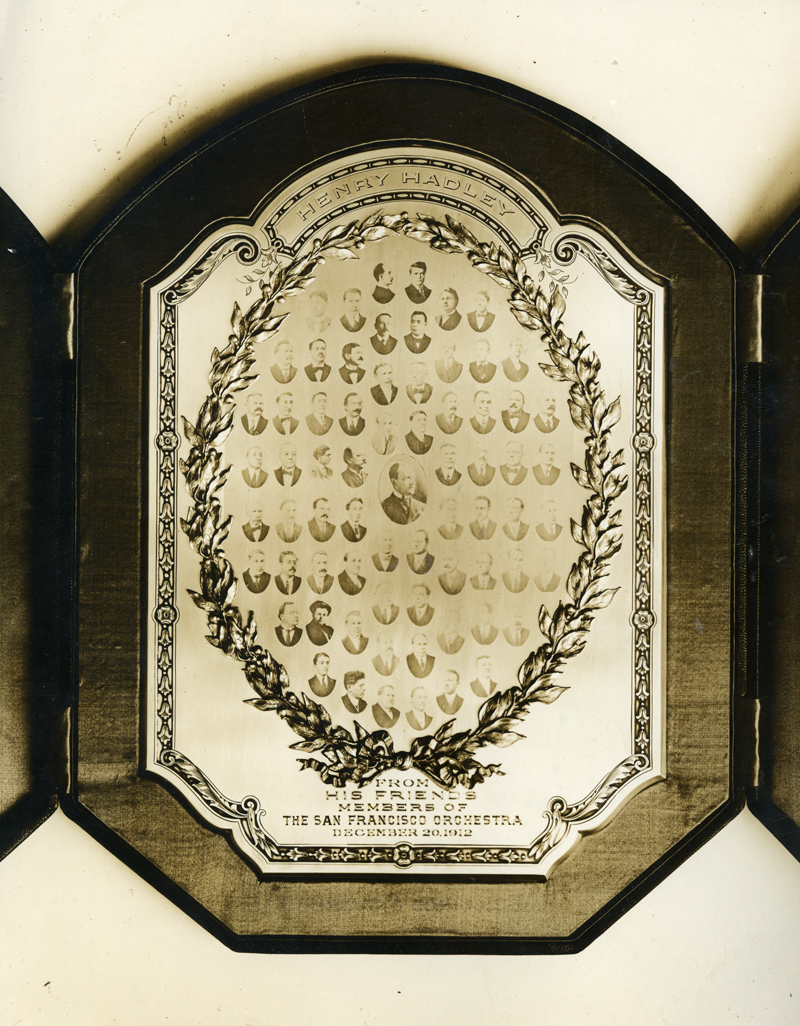
Although some members of the press were highly critical of Hadley, and he was not able to retain his position after the 1914-15 season, he was generally appreciated by all who played under him. This fine plaque was presented to him by the orchestra members on December 20, 1912, midway through his second season.
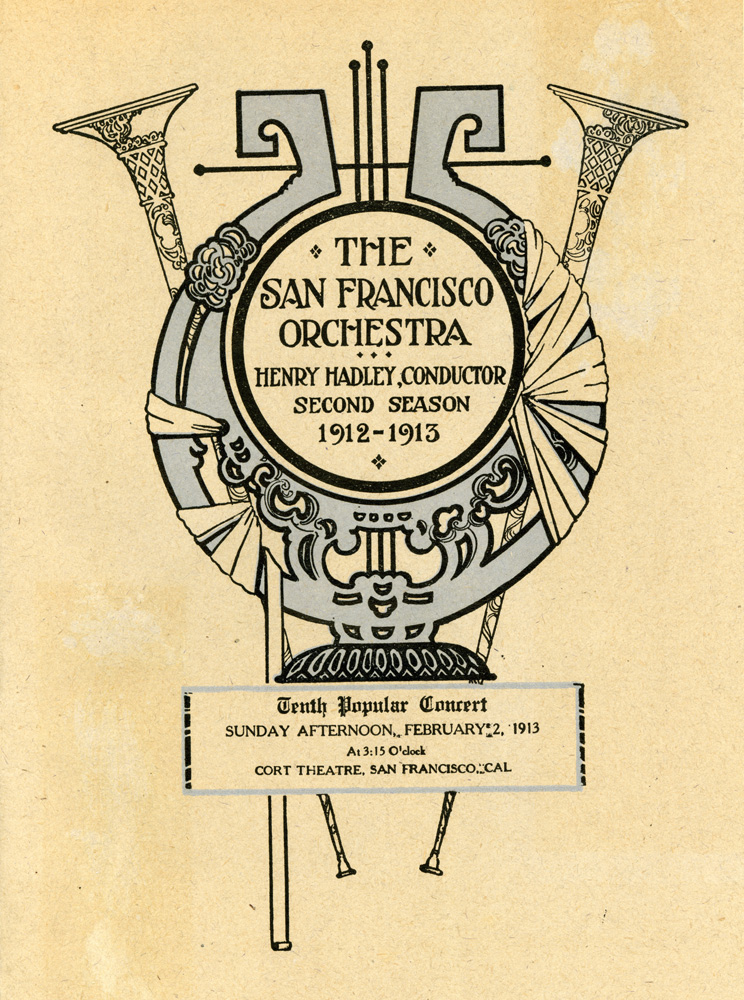
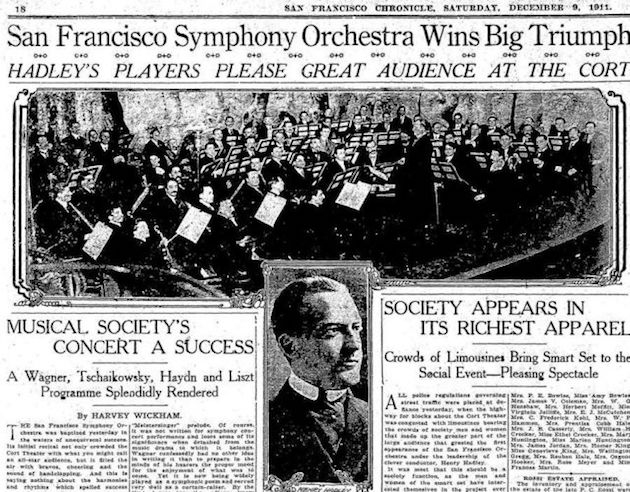
San Francisco Chronicle, Dec. 9, 1911
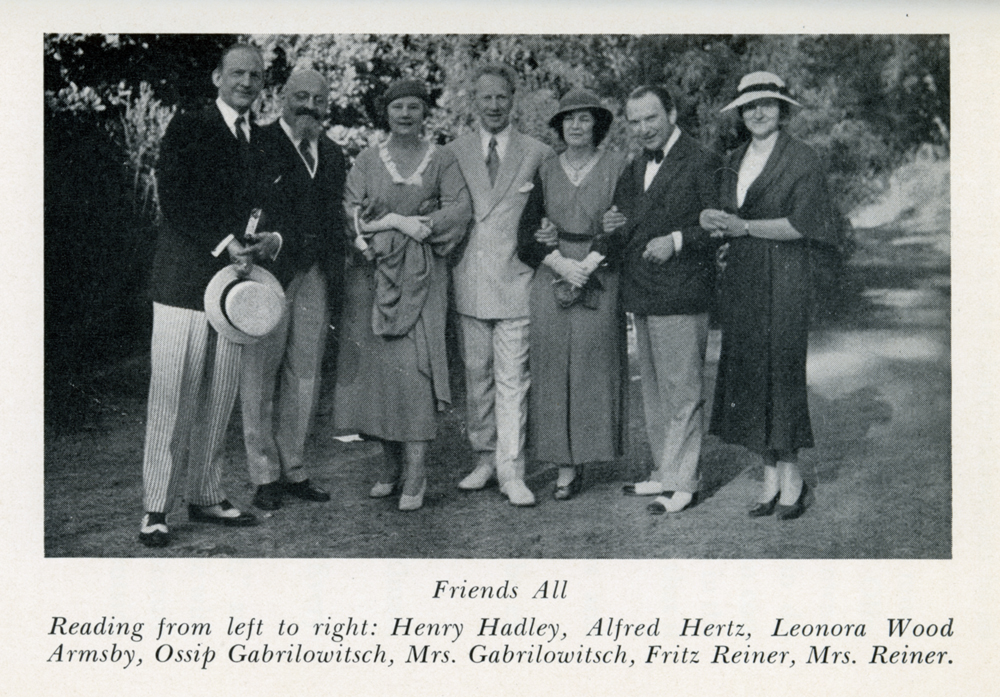
Despite his somewhat difficult tenure, Hadley returned on occasion to conduct in San Francisco, and also at outdoor concerts of the nearby San Mateo Philharmonic Society. This charming group potrait, published by San Francisco's "Mrs. Music" Leonora Wood Armsby - SFSO board president, composer, musicologist and festival director in her 1935 book Musicians Talk, shows that the ever-gracious Hadley retained a heartfelt interest in the San Franciso area to the end.
Hadley continued his involvement with San Francisco's legendary, musical Bohemian Club, composing three summer major, serious musical dramas, left the Bohemians a stirring march, and wrote his suite San Francisco as a tribute in 1931.